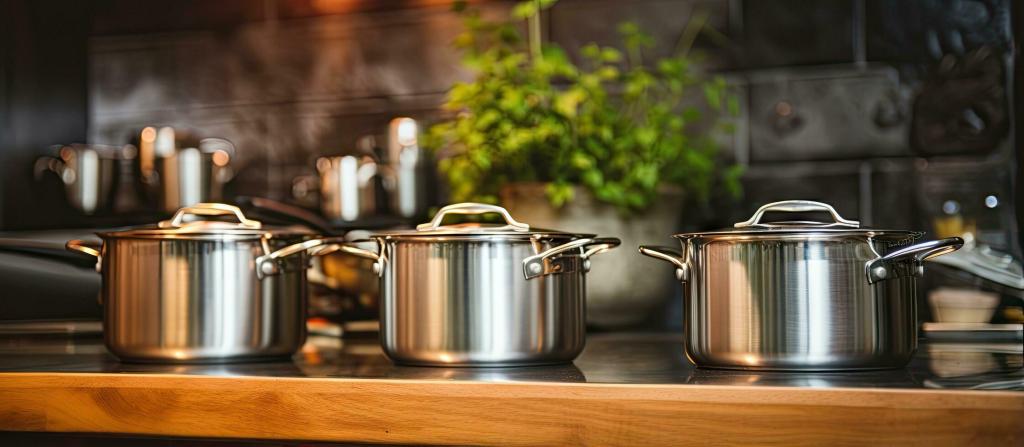
In every home, pots and pans carry the stories of daily meals, cozy breakfasts, rushed dinners, and special treats. But over time, they collect stubborn stains, burnt bits, and greasy buildup that even the most eco-conscious among us can find hard to tackle.
Most commercial cookware cleaners are loaded with chemicals that not only linger on your cookware but can also leach into your next meal. No thanks.
Here’s how to bring your pots and pans back to life — the clean, non-toxic way.
✨ 1. Bicarbonate Soda + Vinegar: The Classic Combo
This timeless duo is the MVP of natural cleaning. Perfect for stainless steel or enamel pots with burnt-on food.
How to Use:
- Sprinkle a generous layer of bicarb soda on the bottom of the pan.
- Add enough white vinegar to create a fizz (it’s working its magic).
- Let it sit for 10–15 minutes.
- Scrub gently with a non-abrasive pad, rinse, and dry.
🧼 This method breaks down grease and lifts grime without damaging your cookware.
✨ 2. Lemon + Salt Scrub (for Copper or Brass Pans)
This old-school method works beautifully for tarnished copper and brass — and smells fresh too.
How to Use:
- Cut a lemon in half and dip it in coarse salt.
- Scrub the surface using the lemon as your “sponge.”
- Let the acidic magic work for 5 minutes, then rinse with warm water.
🌿 Chemical-free and child-safe, this method is as beautiful as it is effective.
✨ 3. Castile Soap + Hot Water (for Everyday Cleaning)
For regular use, you can’t go wrong with castile soap. It’s gentle, effective, and safe for both your body and your cookware.
How to Use:
- Add a small squirt of castile soap to your pan.
- Fill with hot water and soak for 10–15 minutes.
- Scrub and rinse well.
✅ Castile soap cuts through oil and food residue with zero toxins left behind.
✨ 4. Bicarb Paste (for Tough Stains)
Got stubborn burn marks? Make a concentrated paste of bicarb soda and water.
How to Use:
- Mix bicarb with just enough water to form a thick paste.
- Apply it generously to the problem areas.
- Let sit overnight.
- Scrub and rinse thoroughly the next day.
This slow-release method works wonders with minimal elbow grease.
A Quick Note on Non-Stick Pans:
Non-stick cookware is notorious for its chemical coatings. If you’re still using Teflon or similar, consider making the switch to cast iron, stainless steel, or ceramic — and use the above natural methods to keep them in perfect shape.
Because what you cook in matters. And what you clean with? That matters just as much.
Non-toxic cookware cleaning isn’t just about sparkle — it’s about peace of mind. It’s about creating a home where your little ones can lick the spoon without a second thought. Where health isn’t an afterthought — it’s the foundation.
Want more practical home detox tips? Stick around. The Clean Crib is your one-stop hub for cleaner living, from your kitchen to your consciousness. 💚
 THE CLEAN CRIB