
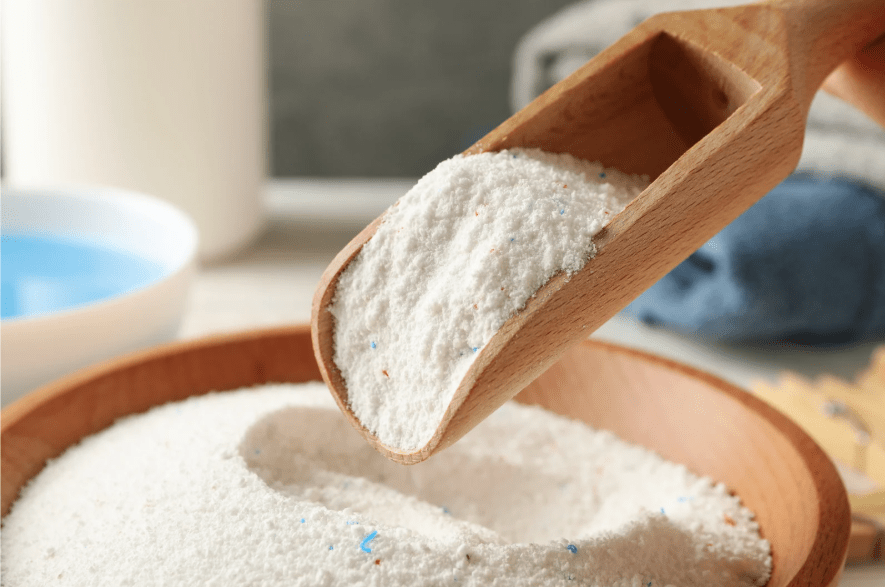
Most families wash clothes multiple times a week — which means we’re constantly in contact with whatever residue our laundry detergent leaves behind. And it’s more than just “clean scent” and softness — it’s often a hidden chemical cocktail that soaks into our clothes, towels, bedding… and eventually, our bodies.
Making your own washing powder is one of the simplest and most effective ways to reduce your family’s exposure to toxins — especially those with long-term effects on your skin, hormones, lungs, and immune system.
Why Ditch Conventional Laundry Powder?
Here’s what’s actually in most store-bought detergents:
❌ Synthetic Fragrance
Labeled vaguely as “parfum” or “fragrance,” this can be a mix of hundreds of chemicals — many of which are known endocrine disruptors. These can mimic hormones and interfere with development, fertility, mood regulation, and more.
❌ Optical Brighteners
These chemicals coat fabric to reflect light, making clothes look “whiter” without actually cleaning them. They are skin irritants, can trigger allergic reactions, and linger on clothing after washing — exposing you long after the wash is done.
❌ Sodium Lauryl Sulfate (SLS) & SLES
These foaming agents are harsh on the skin and known to cause eczema, dryness, and irritation, especially with repeated exposure. They can also disrupt the skin’s protective barrier.
❌ Preservatives (e.g. Methylisothiazolinone, Benzisothiazolinone)
These are linked to allergic reactions, respiratory issues, and in some studies, even neurotoxicity. They’re commonly used to give products a long shelf life.
❌ Fillers and Binders
Many conventional powders include ingredients that serve no cleaning purpose — just bulk. Some may even include petroleum-derived compounds and formaldehyde releasers, which are absorbed through skin and inhaled.
What Long-Term Use Can Do
Repeated, long-term exposure to these substances may lead to:
- Skin conditions like dermatitis, eczema, and chronic rashes
- Hormonal imbalance, including effects on thyroid and reproductive health
- Increased sensitivity to other products and allergens
- Asthma and respiratory symptoms, especially in children
- Accumulation in fat tissue, contributing to toxic load over time
You don’t have to use them daily for them to build up. Many of these chemicals are bioaccumulative — meaning they store in your body faster than you can detox them.
My Go-To DIY Washing Powder Recipe
Here’s a tried-and-true formula that’s gentle on the body, tough on dirt, and easy to make at home.
🌿 Ingredients:
- 1 bar of natural castile soap (e.g. Dr. Bronner’s or unscented handmade soap)
- 1 cup washing soda (sodium carbonate — a natural water softener and degreaser)
- 1 cup baking soda (neutralizes odors and softens water)
- ½ cup borax (optional – boosts cleaning but should be skipped for ultra-sensitive use)
- 10–20 drops of essential oils (like lavender, lemon, or tea tree — optional for scent and added antimicrobial power)
🌀 Instructions:
- Grate the soap finely with a cheese grater or food processor.
- Combine with washing soda, baking soda, and borax (if using).
- Add essential oils and stir well.
- Store in an airtight glass container or jar.
🧺 To Use:
- Use 2–3 tablespoons per load. Works well in both top and front loaders.
A Note on Borax
Borax is a naturally occurring mineral, but it’s still debated in holistic circles. Some avoid it altogether, while others use it safely in cleaning. If you’re making this for baby clothes or those with very sensitive skin, you may prefer to leave it out. Personally: I leave this one out, however it’s up to you.
Final Thoughts
We’re not just talking about a cleaner shirt. We’re talking about daily, skin-deep exposure to chemicals that can change the way your body functions.
Making your own washing powder is one small shift — but one with huge benefits for your family’s long-term health. It’s easy, affordable, and puts the power back in your hands.
 THE CLEAN CRIB